
Curbless Shower: What It Really Is and When It Makes Sense
Uncategorized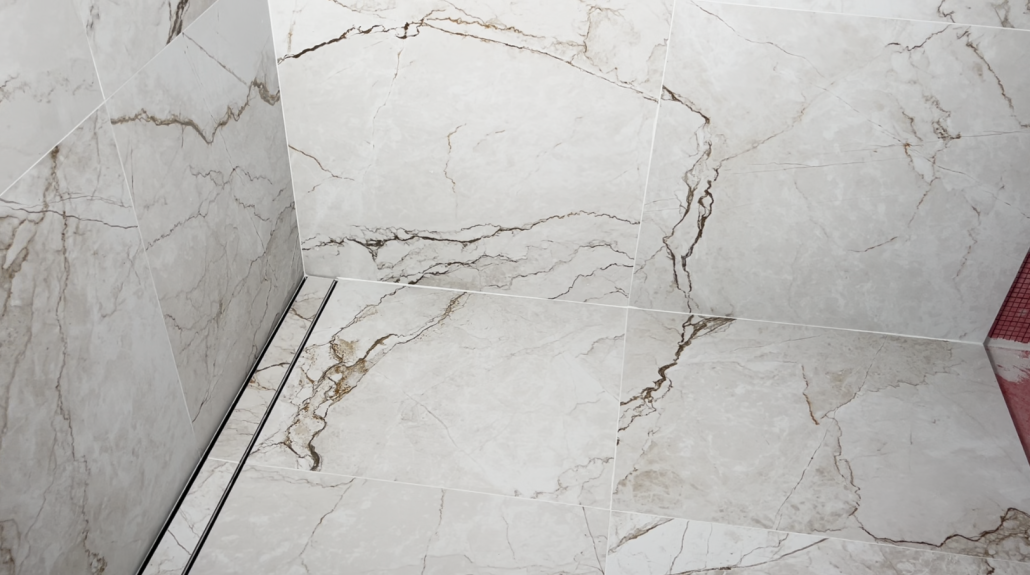
A curbless shower is exactly what it sounds like: a shower without a step or raised threshold. The floor flows straight in. No lip to step over. No visual break.
That simplicity is the appeal — and also where most mistakes happen.
People often assume curbless automatically means “better.” It doesn’t. Done right, it’s clean, accessible, and timeless. Done wrong, it becomes a daily annoyance with water everywhere and constant maintenance.
Let’s slow it down and look at the real picture.
What a curbless shower actually involves (not the Instagram version)
Removing the curb is the part everyone sees. It’s also the easiest step in the entire process. Where most projects succeed or fail is in everything you don’t see once the tile is down.
A properly built walk-in shower without a curb isn’t just a regular shower with one less edge. It requires deliberate planning below the surface, starting with how the floor is built and how water is managed.
In curbless showers, waterproofing cannot stop at the shower footprint. The system must protect adjacent floor areas as well, which is why professionals typically rely on a continuous waterproofing shower membrane Water-Stop, installed under the tile and properly sealed at overlaps, corners, and drains.
At a minimum, it involves:
A recessed or carefully sloped subfloor so water naturally moves where it should
A drainage system designed for open showers, not adapted from standard layouts
Waterproofing that extends well beyond the shower footprint, not just the “wet” area
This isn’t cosmetic work. It’s structural coordination between framing, plumbing, waterproofing, and finish materials.
If a contractor treats a curbless shower like a standard shower with fewer parts — same drain, same slope, same waterproofing — that’s not confidence. That’s a red flag. At that point, it’s better to pause the project than fix a preventable problem later.
Why homeowners choose a curbless shower
When you strip away trends and photos, most homeowners choose a curbless shower for one of three very practical reasons.
1. Accessibility that doesn’t feel medical
A zero threshold shower removes one of the most common daily obstacles in a bathroom. No step, no hesitation, no awkward balance moment.
That translates into:
Easier entry for anyone with limited mobility
Safer footing, especially on wet days
Long-term usability without turning the bathroom into something that feels clinical
This is exactly why curbless showers show up so often in aging in place projects. They solve real problems without advertising why.
2. Visual space (especially in smaller bathrooms)
A curb cuts the floor visually, even when the bathroom is well designed. Remove it, and the room immediately feels more open.
In smaller bathrooms, this effect can matter more than upgrading finishes. Continuous floor tile and uninterrupted sightlines make tight spaces feel calmer and less boxed in.
3. Resale and perception
Buyers tend to associate curbless showers with:
Custom construction
Higher-end remodeling work
Thoughtful, intentional design
Not every buyer is actively looking for one. But when a curbless shower is done well, very few people see it as a negative. It quietly signals quality.

The downsides about curbless showers nobody mentions until it’s too late
This is the part most sales pages avoid, because it complicates the pitch. This is why many installers extend waterproofing and floor protection outside the shower area, often combining a shower membrane with an uncoupling membrane G-Flex on the bathroom floor to manage both moisture and tile movement.
Water control is not automatic
A barrier-free shower doesn’t magically manage water just because the curb is gone. It relies entirely on correct execution.
That means:
A precise slope — not something guessed by eye
The right drain type for the layout (linear vs. center)
Glass placement that actually stops splash instead of just looking good
When drainage design is wrong, the results are immediate and annoying:
Water spreading across the bathroom floor
Damp corners that never fully dry
Towels becoming part of the daily routine
Cost creeps up fast
A curbless shower usually costs more than a standard walk-in shower, and not because of luxury finishes.
The added cost comes from:
Time-consuming subfloor modifications
Expanded waterproofing areas
Labor that demands precision instead of shortcuts
This is one of those projects where “almost right” is still wrong.
Not every house is a good candidate
Some homes make curbless showers harder than they look on paper. Second-floor bathrooms, concrete slabs, or older framing systems can limit how much slope or recess is realistically achievable.
In those cases, the answer isn’t always no — but it’s sometimes “possible, but not smart.”
And knowing when to say that is part of doing the job responsibly.
Waterproofing and wall construction in a curbless shower
In a curbless shower, waterproofing carries more responsibility than in any standard shower layout. Without a curb acting as a physical barrier, water moves farther, lingers longer, and reaches areas that would normally stay dry.
That’s why cutting corners here almost always shows up later.
The most reliable approach is a shower waterproofing membrane with a water-stop system. This type of system creates a continuous waterproof barrier that extends beyond the shower footprint, helping control lateral water movement instead of relying on tile or grout to do that job. It also protects the subfloor from long-term moisture buildup, which is where most hidden damage begins.
Tile finishes water. Membranes stop it.

For the walls, W-S dry construction boards can also be used and are often preferable to traditional cement board. These panels are dimensionally stable, resistant to moisture-related movement, and provide a flat surface that works well with membrane-based waterproofing systems.
In a barrier-free shower, walls are exposed to more moisture over a larger area. Using dry construction boards helps limit water absorption behind the tile and reduces the risk of cracks or compromised seals over time.
The critical point is system compatibility. Floor slope, drain, waterproofing membrane, water-stop details, and wall panels all need to work together. When they do, a curbless shower performs predictably and lasts. When they don’t, problems are usually slow — and expensive.
Curbless shower vs walk-in shower (with curb)
Feature | Curbless Shower | Walk-In Shower (Low Curb) |
Entry | Flush with floor | Small step |
Accessibility | Excellent | Good |
Water containment | Requires planning | Easier |
Cost | Higher | Moderate |
Installation complexity | High | Medium |
Maintenance | Depends on design | Generally lower |
This table matters because many homeowners would be perfectly happy with a low threshold shower — and save money and stress.
Drainage: the make-or-break detail
If there’s one thing that defines success, it’s drainage.
Linear drains
Popular for curbless showers because they:
- Allow a single directional slope
- Sit cleanly against walls or glass
- Handle higher water flow
Center drains
They can work, but only with precise multi-directional slope. In open showers, this leaves less margin for error.
If drainage is treated as an afterthought, everything else fails.
Curbless shower Cost expectations in the U.S.
A realistic curbless shower cost in the USA typically lands between:
- $6,000 – $10,000 for a standard remodel
- Higher if structural changes are needed
That’s not a scare tactic — it’s the price of doing it correctly once.
Cheap curbless showers usually become expensive repairs.
Is a curbless shower worth it?
Short answer: sometimes.
It is worth it if:
- Accessibility matters now or soon
- You want long-term usability
- The bathroom layout supports proper drainage
It’s probably not worth it if:
- Budget is tight
- You’re chasing a trend
- The installer lacks real experience
A bad curbless shower is worse than a good traditional one.
Frequently Asked Questions About Curbless Showers
What is a curbless shower?
A curbless shower is a shower design with no raised curb or threshold. The shower floor is level with the bathroom floor, creating a seamless, modern, and accessible shower space.
What is the difference between a curbless shower and a walk-in shower?
A walk-in shower may still have a small curb, while a true curbless shower—also called a zero-threshold shower—has no step at all, allowing continuous flooring into the shower area.
Are curbless showers the same as barrier-free showers?
Yes. Curbless showers are often referred to as barrier-free showers, ADA showers, or zero-entry showers because they eliminate physical barriers and improve accessibility.
Are curbless showers ADA compliant?
A curbless shower can be ADA compliant if it meets specific requirements such as proper dimensions, slip-resistant flooring, adequate drainage, and accessibility features like grab bars and seating.
How is water contained in a curbless shower?
Water is controlled through proper floor slope, linear drains, and waterproofing systems. A well-designed curbless shower directs water efficiently toward the drain without leaks or splashing.
Do curbless showers require special waterproofing?
Yes. Because there is no curb, full-surface waterproofing is critical. Waterproof membranes must extend across the shower and bathroom floor to prevent water infiltration.
Can a curbless shower be installed in an existing bathroom?
Yes, but it depends on floor structure and drainage height. In many remodels, curbless showers are achieved using recessed subfloors or pre-sloped shower systems.
Are curbless showers suitable for small bathrooms?
Absolutely. Curbless showers create visual continuity and make small bathrooms appear larger by eliminating breaks in the flooring.
What type of drain is best for a curbless shower?
Linear drains are the most common choice for curbless showers. They allow a single-direction slope and improve both drainage efficiency and design flexibility.
What are the main benefits of a curbless shower?
Curbless showers offer improved accessibility, modern aesthetics, easier cleaning, safer entry, and long-term value—making them ideal for aging-in-place and luxury bathroom designs.


Leave a Reply
Want to join the discussion?Feel free to contribute!